Teflon™ (PTFE) coating is widely known for its non-stick performance in everyday cookware. But in industrial applications, its role goes much further.
Used across industries such as packaging, automotive, and food processing, this coating helps improve release, reduce material buildup, and support more efficient equipment operation.
This guide explains what Teflon™ coating is, its key benefits, and how it is applied to industrial components. It also helps you understand when Teflon™ coating is the right choice for your project.
What Is Teflon™ Coating?
Teflon™ coating is a fluoropolymer-based surface coating used to change how a part performs in service. It adds a functional layer to the surface of a component so it can release more easily, resist chemicals better, and work more reliably in demanding environments.
Teflon™ is a trademarked brand name associated with fluoropolymer materials, while PTFE, or polytetrafluoroethylene, is the best-known material within that group. Because PTFE is the most widely recognized and commonly used type in industrial finishing, many people use “Teflon™ coating” and “PTFE coating” almost interchangeably. In technical use, however, the term Teflon™ coating is often used more broadly than PTFE alone.
As a surface finish, Teflon™ coating is not the base material of the part itself. Instead, it is applied over a substrate such as steel, aluminum, stainless steel, or certain plastics. Once applied and cured, it forms a thin surface layer that gives the component properties the original material may not have on its own.
The material behind this type of coating was first discovered in 1938 and later became widely used because of its low surface energy, chemical inertness, and thermal stability. Over time, fluoropolymer coatings became an important solution for industrial applications where sticking, contamination, friction, or difficult cleaning could reduce performance.
Modern Teflon™ coating is also different from older generations once associated with PFOA. In most major markets, PFOA was phased out years ago, and current PTFE-based coating systems are generally discussed in terms of coating performance, application method, thickness, and service limits.
Common Types of Teflon™ Coatings
PTFE (Polytetrafluoroethylene)
The most common type and the one most people mean when they refer to Teflon™ coating. It offers excellent non-stick performance, low friction, strong chemical resistance, and continuous service temperatures of up to about 260°C (500°F). It is commonly used for cookware and high-temperature industrial parts.
FEP (Fluorinated Ethylene Propylene)
FEP provides good non-stick and chemical-resistant properties, with greater flexibility and clarity than PTFE. Its temperature limit is slightly lower, typically around 200°C.
PFA (Perfluoroalkoxy)
PFA is similar to PTFE but offers better toughness and crack resistance under heat and stress. It is often used when both chemical resistance and high-temperature performance are important.
ETFE (Ethylene Tetrafluoroethylene)
ETFE is a tougher fluoropolymer with strong impact resistance and good durability. It is often used in demanding industrial, aerospace, and architectural applications.
Each type has its own trade-offs. PTFE is the most widely used for general non-stick and low-friction applications, while FEP and PFA are often selected for easier processing or improved toughness. ETFE is typically chosen where mechanical durability matters more.
Advantages of Teflon™ Coating
Ultra-low friction: Parts slide with minimal resistance, which helps reduce wear on moving components. In PTFE-based systems, the coefficient of friction can be as low as 0.05.
High heat resistance: Teflon™ coating can perform continuously at temperatures up to about 260°C (500°F), depending on the coating type. This makes it suitable for parts used near ovens, presses, or hot fluid contact.
Chemical and corrosion resistance: The coating resists many acids, solvents, oils, and corrosive substances, helping protect parts used in aggressive operating environments.
Non-stick and easy to clean: The coated surface helps prevent material adhesion. Molds can release rubber or plastic parts more easily, while rollers in food-processing equipment can stay cleaner during operation.
Electrical insulation: PTFE-based coatings also provide strong electrical insulation, which makes them useful for certain connectors and other electronic components.
Aging and weathering resistance: These coatings remain stable over time and perform well under exposure to moisture, UV, and general environmental conditions.
How Teflon™ Coating Is Applied
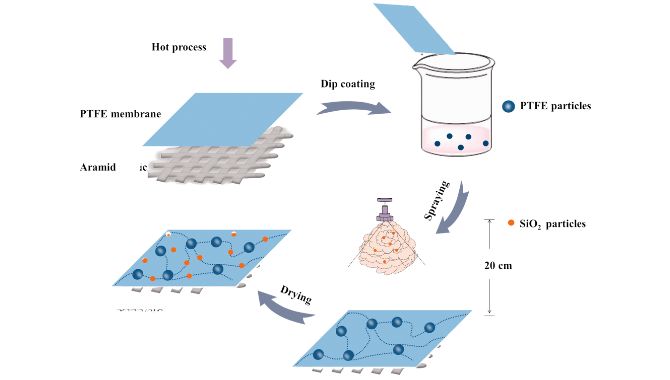
Teflon™ coating is usually applied through three main steps: surface preparation, coating application, and heat curing.
First, the part is cleaned to remove oil, dust, oxidation, and other residue that could affect adhesion. In some cases, the surface is also roughened or treated to improve bonding. Primers may also be used, depending on the coating system and substrate.
Next, the coating is applied by spray, dip, or another controlled finishing method, depending on the coating type and part geometry. Some systems use a primer and topcoat, while others use a single-coat process. Teflon™ industrial coatings are available in both liquid and powder forms, and the form selected can affect the application and curing process.
The part is then heat-cured so the coating can form a stable surface layer with the intended non-stick, low-friction, and chemical-resistant properties. Cure temperatures and film-build ranges vary by coating type.
Design Considerations for Coated Parts
How the coating is applied is only part of the process. To achieve consistent coverage and reliable performance, the part itself also needs to be designed with coating requirements in mind.
Allow for coating thickness: Even a thin coating adds material to the part surface. On precision components, that added thickness can affect fit, clearance, or assembly, especially on mating surfaces and tight-tolerance areas.
Pay attention to edges and corners: Sharp edges and tight internal corners can make coating coverage less uniform. Rounded transitions usually help produce a more consistent finish and reduce the risk of thin coverage in difficult areas.
Consider part geometry: Deep recesses, narrow channels, threads, and other complex features can make coating more difficult to apply evenly. Simpler and more accessible surfaces are generally easier to coat consistently.
Define coating areas carefully: Not every surface on a part always needs to be coated. In some cases, selective coating is the better choice, especially where dimensional control, electrical contact, or later assembly operations are involved.
Match the coating to the service environment: Temperature, chemical exposure, friction conditions, and cleaning requirements should all be considered before selecting the coating system. The right choice depends on how the part will actually be used.
Think about the substrate material: Coating adhesion and overall performance can vary depending on whether the part is made from steel, aluminum, stainless steel, or plastic. The substrate should be considered early, not after the design is finalized.
Good coating results usually begin before the finishing stage. When part design, substrate, and coating requirements are considered together, it is much easier to achieve the intended performance in production.
Applications of Teflon™ Coating
Although Teflon™ coating is often associated with non-stick cookware, its industrial use is much broader. In practice, it is selected wherever surface behavior has a direct effect on release, friction, cleanliness, or chemical resistance.
One of its most common uses is on parts that need good release performance. In packaging and food-processing equipment, Teflon™ coating is often applied to sealing tools, molds, trays, rollers, and forming components. These parts may work under heat and repeated contact, so a non-stick surface can help reduce material buildup, improve consistency, and make cleaning easier.
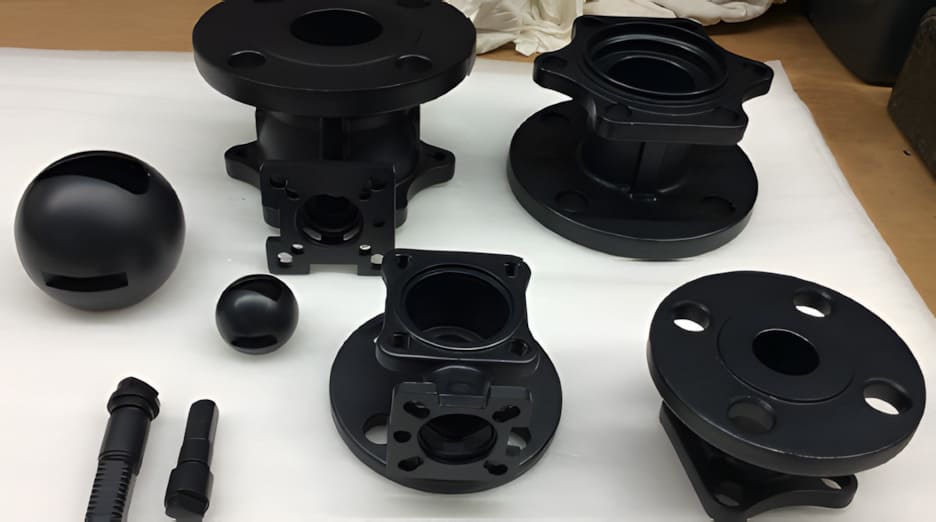
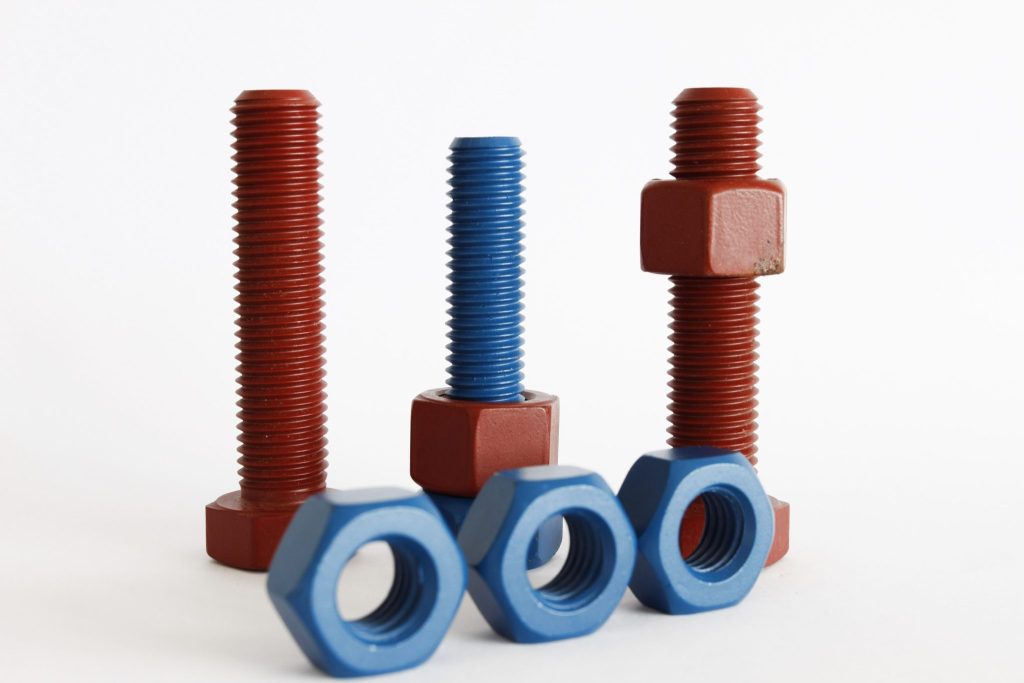
Teflon™ coating is also widely used where lower friction is important. Valves, guides, fasteners, and other moving or contacting parts may benefit from a smoother, lower-friction surface, especially in applications where wear, drag, or sticking can affect performance over time.
In more aggressive operating environments, the coating is often selected for its chemical resistance. Parts exposed to oils, solvents, or other corrosive media may use Teflon™ coating as an added layer of surface protection, particularly where long-term stability matters.
Its value is not limited to mechanical applications. PTFE-based coatings are also known for their insulating properties, which is why related fluoropolymer materials are widely used in wiring, connectors, and other electrical components where both surface protection and electrical performance are important.
In the end, the best application depends on the service conditions of the part. In some cases, the main benefit is easier release. In others, it is lower friction, better chemical resistance, or more stable surface performance over time.
Is Teflon™ Coating Safe to Use?
Teflon™ coating is generally considered safe to use when it is properly specified and used within its recommended operating conditions. Most historical concerns related to Teflon™ were linked to older manufacturing issues rather than to the finished coating itself in normal service.
In practical terms, the main safety consideration is temperature. Like other engineered surface finishes, Teflon™ coating is designed to perform within a defined operating range. When used as intended, it remains stable and effective across a wide range of industrial applications. Problems are more likely to arise only when the coating is exposed to temperatures beyond its recommended limits. Modern guidance commonly places continuous service performance around 260°C (500°F), depending on the coating system.
It is also important to distinguish modern Teflon™ coating from older public concerns associated with PFOA. In most major markets, PFOA was phased out years ago, and current Teflon™ products are typically discussed in terms of application suitability, service limits, and correct use.
Conclusion
Teflon™ coating remains a widely used surface finish because it can improve release, reduce friction, resist chemicals, and support longer part life across many industrial applications.
At Chiggo, we look at coating as part of the full manufacturing process, not as a separate step. From part design and material selection to machining and surface finishing, we work to make sure each stage supports the final performance of the part.
If you are working on a new project or refining an existing part, Chiggo can help support the process from manufacturing through surface finishing.