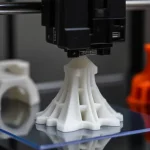
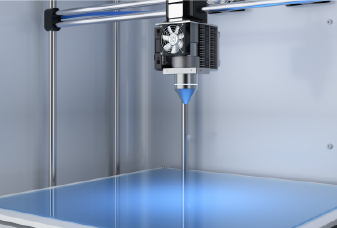
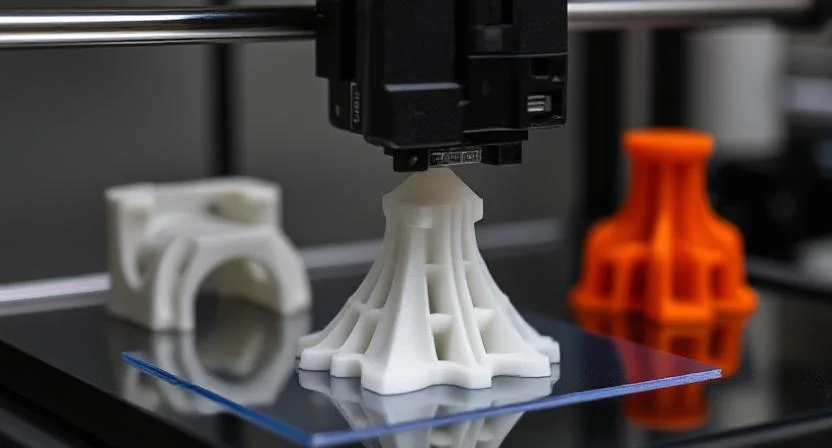
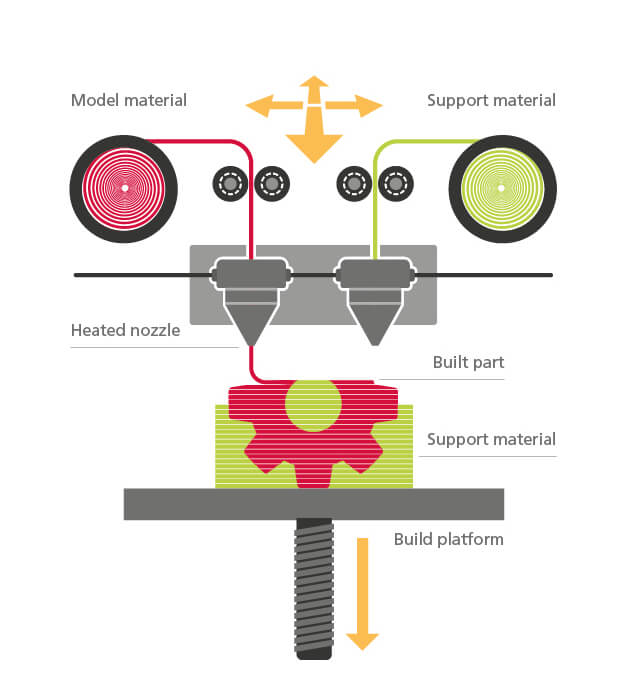
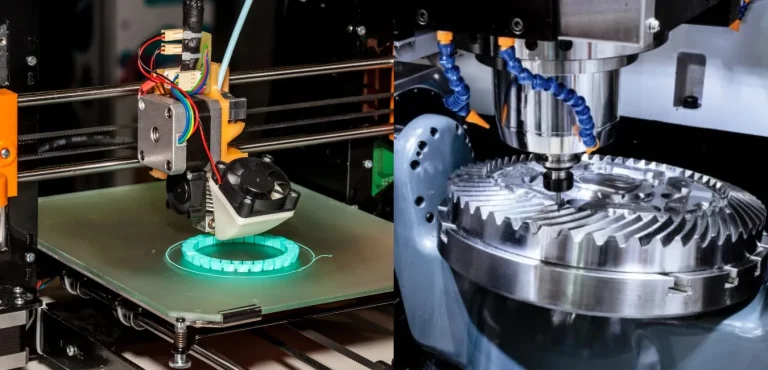
Fused Deposition Modeling (FDM) is a material-extrusion 3D printing process . It works by feeding a thermoplastic filament into a heated nozzle, where it melts and is deposited layer by layer along a programmed toolpath to build the part. In essence, an FDM printer works much like a computer-controlled hot glue gun, extruding thin beads of molten plastic that quickly solidify to form a three-dimensional object.
FDM is the most widely used 3D printing method, particularly at the consumer and educational level. With the largest installed base of printers worldwide, it is often the first process people think of when talking about 3D printing. You may also see the term Fused Filament Fabrication (FFF) used interchangeably. Because “FDM” is a trademark owned by Stratasys, the open-source 3D printing community adopted “FFF” as a neutral alternative; in practice, both terms describe the same extrusion-based process.
This article explains the basics of FDM, including its pros and cons and the differences between desktop and industrial machines. It also covers the common printing plastics and the situations where FDM is most suitable.
While FDM is now the most popular 3D printing method, it was not the first to be invented. In fact, it came after both stereolithography (SLA) and selective laser sintering (SLS). Scott Crump filed the first FDM patent in 1989—three years after SLA and one year after SLS—and together with his wife Lisa founded Stratasys to bring the technology to market.
Throughout the 1990s, Stratasys held the key patents and positioned FDM primarily for industrial prototyping. A major shift came in 2005 with the RepRap (Replicating Rapid Prototyper) Project, an open-source initiative by Adrian Bowyer that aimed to create self-replicating printers. When the core FDM patents expired in 2009, this movement paved the way for companies such as MakerBot, Ultimaker, and Prusa Research to emerge, making desktop printers affordable for hobbyists and educators.
By the 2010s, industrial systems from Stratasys and consumer printers from companies inspired by the open-source movement together had firmly established FDM as the world’s most widely used 3D printing technology.

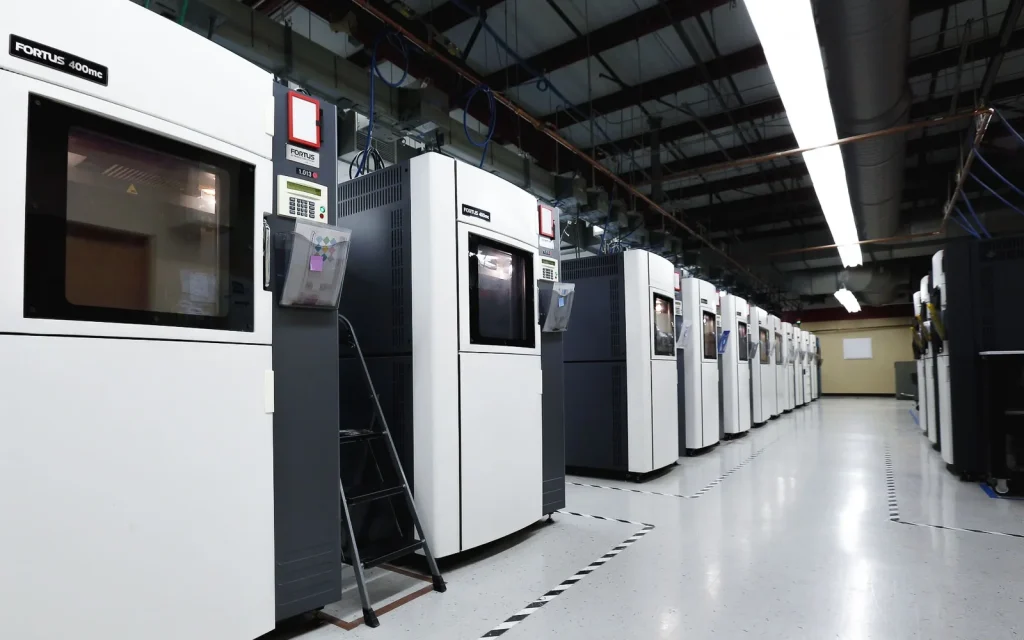
Today, this evolution has resulted in two main categories of machines: industrial systems for professional production and desktop printers for consumers and educators. Their key differences are summarized below:
| Property | Industrial FDM | Desktop FDM |
| Standard accuracy | Around ±0.2–0.3 mm | Around ±0.2–0.5 mm |
| Typical layer thickness | 0.15–0.3 mm | 0.1–0.25 mm |
| Minimum wall thickness | ~1 mm | ~0.8–1 mm |
| Maximum build volume | Large (e.g., 900 × 600 × 900 mm) | Medium (e.g., 200 × 200 × 200 mm) |
| Common materials | ABS/ASA, PC, Nylon, ULTEM | PLA, ABS, PETG, TPU |
| Support materials | Breakaway & soluble | Same material or soluble (dual-extruder) |
| Production capability | Low–medium; repeatable batches | Low; prototypes and one-offs |
| Machine cost | $50,000+ | $500–$5,000 |

An FDM printer turns a digital design into a physical object through the following steps:
3D Modeling : The process begins with a digital model, usually created in CAD software or downloaded from a 3D library. The model is exported in a format like STL or OBJ, which defines the object’s geometry.
Slicing: Slicing software converts the 3D model into a stack of two-dimensional layers and generates the toolpaths the printer will follow. It also adds any necessary supports for overhangs and outputs a G-code file containing the print instructions. Key settings,such as layer height, print speed, infill density, and support placement, are chosen at this stage and directly affect print quality and duration.
Printer Setup: The filament spool is loaded into the extruder, which feeds material toward the hot end. The build plate is cleaned and leveled to ensure proper adhesion of the first layer, and for materials like ABS, it is typically preheated to reduce warping.
Heating, Extrusion, and Layer Deposition: When the nozzle reaches the target temperature, the extruder pushes filament into the heated head, where it melts. The extrusion head is mounted on a three-axis motion system (X, Y, Z) that guides the nozzle precisely across the build area. As the head moves, it extrudes thin strands of molten plastic onto the build plate along the predetermined path.
Each new layer is deposited on top of the previous one. The material cools and solidifies quickly; in many cases, cooling fans attached near the extrusion head accelerate this process, especially for materials like PLA. To fill in wider regions, the nozzle makes multiple passes until the layer is complete. Then, either the build platform descends or the extrusion head rises by one layer height, and the machine begins the next layer. This cycle repeats hundreds or thousands of times until the entire part is built.
The material cools and solidifies almost immediately—often aided by fans for faster cooling with materials like PLA. To fill an area, the nozzle makes multiple passes, much like coloring in a shape with a marker. Once a layer is complete, either the build platform lowers or the extrusion head rises by one layer height, and the process repeats. Layer by layer, the part is built up from the bottom until it is fully formed.
Support Structures: For overhangs or bridges, the printer generates support material to keep unsupported sections from collapsing. These supports may be printed in the same plastic and later broken off, or in a secondary dissolvable filament if the printer has multiple nozzles.
Post-Processing: Once the final layer is deposited, the part cools and is removed from the build plate. Most FDM prints require little more than support removal, but additional finishing steps can be applied if a smoother surface or enhanced performance is desired.
Common post-processing methods for FDM parts include:
FDM is generally the most affordable 3D printing method in both machine price and material cost. Desktop units range from just a few hundred to a few thousand dollars, and even many industrial FDM systems remain less expensive than their SLA or SLS counterparts. Filament is inexpensive, widely available in many brands and types, and easy to source. This low barrier to entry makes FDM accessible for classrooms, research labs, and small businesses.
FDM is excellent for fast design iteration. A part can be printed in minutes to a few hours, allowing teams to go from concept to physical prototype overnight. Compared with methods that require long curing or cooling cycles, FDM shortens lead times and accelerates product development.
FDM supports a broad range of thermoplastics, from common and affordable options like PLA, ABS, and PETG to engineering-grade materials such as Nylon, Polycarbonate, and TPU, and even high-performance polymers like ULTEM or PEEK on industrial systems. This versatility allows engineers to choose materials that closely match the performance requirements of the final product.
Unlike resin or powder-based systems, which are restricted by vat or bed dimensions, FDM machines can be scaled simply by enlarging the frame and motion system. This scalability gives FDM a clear cost-to-size advantage and makes it a practical solution for producing large prototypes such as automotive components or architectural models.
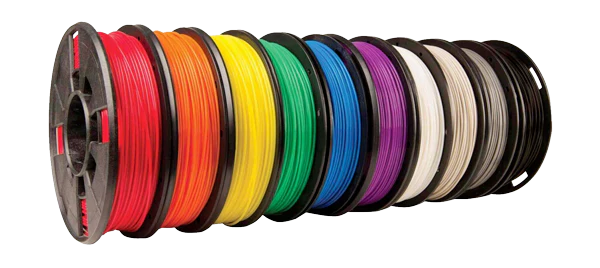
Operating an FDM printer is straightforward: load the filament, start the print, and remove the part when it’s done. Post-processing is usually limited to detaching supports, unlike resin printing which requires washing, curing, and handling of chemicals. Many FDM parts are ready to use immediately, with extra finishing only required for certain materials or applications. Another advantage is color flexibility: with filaments available in a wide range of shades, models can often be printed in their final look without the extra painting that resin prints typically require.

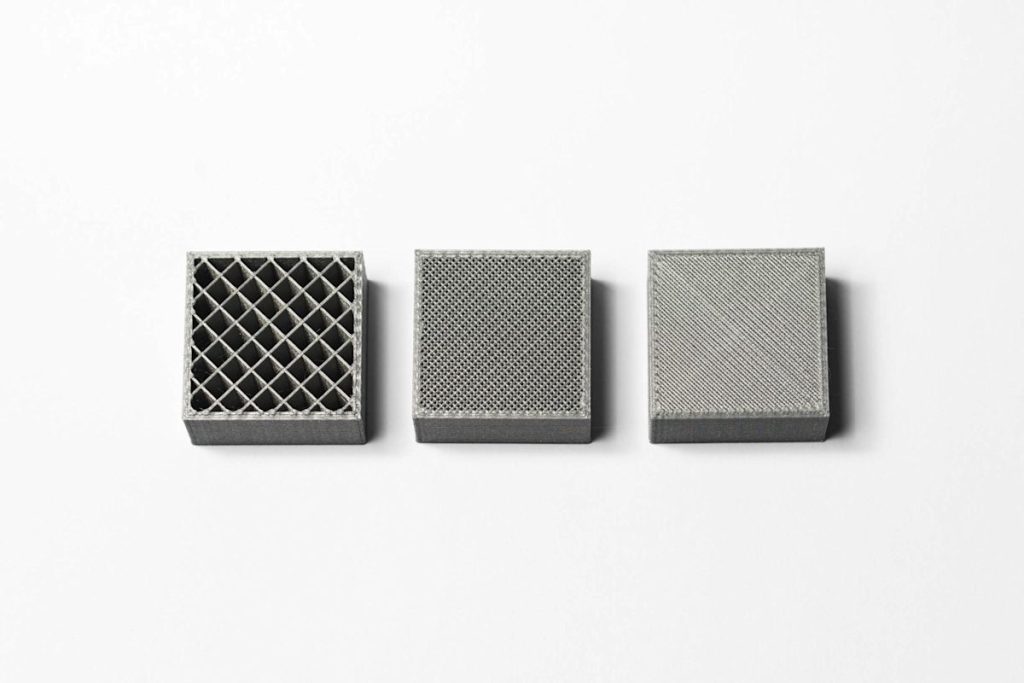
FDM allows users to adjust infill density and shell thickness, balancing print time, material consumption, and mechanical performance. This tunability means parts can be optimized as lightweight prototypes or as stronger functional components. On higher-end systems, dissolvable support materials are also available, making it easier to handle complex geometries and simplifying post-processing.
FDM uses filament that is melted and deposited exactly where needed, so almost no raw material is wasted during printing. This contrasts with powder-based methods like SLS or MJF, where unused powder requires handling and may degrade after multiple cycles. With smart design that minimizes or eliminates support structures, FDM can be even more efficient in material usage.
FDM builds objects with visible layer lines, and even at fine settings (~0.1–0.2 mm), curved surfaces show a “stair-stepping” effect. The minimum feature size is limited by nozzle diameter (often ~0.4 mm), so very small details or precision fits are difficult to achieve. As a result, professional-quality appearance or accuracy often requires post-processing: threads may need tapping, holes may need reaming, and surfaces may need sanding, painting, or vapor smoothing for a polished finish. FDM also struggles to produce fully watertight or airtight parts without additional sealing.
Because parts are made layer by layer, FDM prints are anisotropic: significantly weaker along the Z-axis. The bonding between layers is less robust than within a layer, making parts more likely to split or delaminate under stress applied perpendicular to the build direction. This limits their performance in mechanically critical applications unless part orientation and infill are carefully optimized.
Thermal contraction during cooling can cause parts to warp, with edges lifting off the build plate or thin features bending. ABS and Nylon are especially prone to this, often requiring heated beds or enclosed chambers. Even with calibration, achieving high dimensional accuracy is difficult, with tolerances typically around ±0.1–0.3 mm. Holes and fine details often need adjustment or machining for a precise fit.
FDM printers require support structures for overhangs steeper than ~45° or long bridges. These supports add material, extend print times, and can leave blemishes when removed. Complex internal geometries may be impossible to print because supports would be trapped inside. While dual-extruder machines with dissolvable supports improve flexibility, they add cost and still require removal steps.
Although FDM supports many thermoplastics, it is still limited to that class of materials. Metals and full ceramics cannot be printed directly. High-performance polymers like PEEK or ULTEM require very high nozzle and chamber temperatures, making them accessible only on specialized industrial machines. As a result, each FDM printer can only handle a subset of the full material spectrum.
Due to the simplicity and cost-driven design of FDM systems, users often spend time tweaking settings like bed leveling and nozzle height to achieve consistent quality. The heavy reliance on mechanical motion means regular maintenance is needed—adjusting belt tension, lubricating rails, cleaning extruders, and replacing parts such as nozzles or hot ends.
Print quality is highly dependent on filament quality. Poor dimensional tolerance in filament diameter or inconsistent composition can lead to extrusion problems. In addition, most filaments are hygroscopic; if not stored properly, they absorb moisture from the air, leading to bubbling, poor surface finish, or weak layer adhesion during printing.

Decades of development in the plastics industry have created a wide range of polymer filaments, from everyday plastics to specialized engineering polymers.
PLA is the most popular filament for desktop FDM printers. It’s a biodegradable plastic (often corn-starch based) that is easy to print and produces parts with good detail and surface quality. When higher toughness and temperature resistance are needed, ABS is usually the choice. However, ABS is more prone to warping and often requires a heated bed or chamber to keep corners from lifting.
Another popular alternative is PETG, which combines PLA’s ease of printing with ABS’s durability. It offers a good balance of strength, flexibility, and chemical resistance.
Industrial FDM machines, on the other hand, mainly use engineering thermoplastics such as ABS, polycarbonate (PC), and Ultem (PEI). These materials often include additives to enhance their properties, making them suitable for demanding applications that require high impact strength, thermal stability, chemical resistance, or even biocompatibility.
The table below summarizes the key pros, cons, and typical applications of the most common FDM printing materials:
| Material | Pros | Cons | Common Applications |
| PLA | Easy to print; great detail & surface finish. Bio-based and minimal warping. | Brittle; low heat resistance (deforms at ~60 °C). Not ideal for load-bearing parts. | Visual prototypes, models, education, hobby projects |
| ABS | Strong and durable; higher temperature resistance (~100 °C). Can be post-processed (e.g., acetone smoothing). | Prone to warping without heated bed/chamber. Emits fumes (needs ventilation). Slightly harder to print than PLA. | Functional prototypes, enclosures, automotive parts, consumer products |
| PETG | Good strength and layer adhesion; prints easily with low warp. Moisture and chemical resistant; often food-safe. | Slightly less stiff than ABS; surface can attract stringing if settings aren’t tuned. | Functional parts, containers, mechanical components, household items |
| Nylon (PA) | High tensile strength and toughness; wear and chemical resistant. Some flexibility (for hinges) and great durability. | Absorbs moisture (filament must be kept dry). Needs high print temps and enclosure to reduce warping. | Gears, bearings, clips, jigs and fixtures, structural prototypes |
| TPU (Flex) | Very flexible and elastic – can create rubber-like parts. Good impact absorption. | Difficult to print accurately at speed (slow prints needed). Soft filament can jam in some extruders not designed for flexibles. | Gaskets, seals, phone cases, wheels/tires, medical models |
| Polycarbonate (PC) | Excellent impact strength; higher heat resistance (~110 °C). Suitable for tough functional parts. | Requires high printer temps; prone to warping/cracking if cooled too fast. Generally needs an enclosed, industrial-grade printer. | Industrial tooling, protective housings, automotive components |
| PEI/ULTEM | High-performance: great strength-to-weight, flame retardant, works up to ~170 °C. Used in aerospace, automotive. | Very expensive material; only prints on high-end machines due to extreme temperature requirements. | Aerospace parts, under-the-hood automotive components, medical devices |
Given the strengths and limitations discussed, here are some typical cases where FDM is the most suitable choice compared to other methods:
Cost or Speed is the Primary Concern: If you need a prototype quickly and inexpensively, FDM is hard to beat. You can go from CAD to a physical part in the same day without breaking the bank. Perfect for early-stage prototyping, student projects, and hobby builds where affordable iteration matters more than perfection.
The Part Size is Large: Large-format FDM printers can handle parts that would be extremely costly or impossible in resin vats or powder beds. Think architectural models, full-size casings, or big functional prototypes – FDM scales up more easily and at lower cost.
Functional Prototypes in Real Plastics: When you need the prototype to behave like a production plastic part – for example, a clip that must flex without breaking or a mount that must withstand heat – FDM with ABS, PC, or Nylon is ideal. These parts can be drilled, screwed, and tested in working conditions where resin prints might fail.
Custom Tools, Jigs, or Replacement Parts: FDM excels at producing one-off or low-volume parts tailored to specific needs. A custom jig for assembly? A replacement knob for equipment? Print it overnight and put it to work. For many moderate-duty uses, FDM prints can serve as real end-use parts.
Educational and Home Environments: FDM is the most user-friendly and safe 3D printing option in classrooms, makerspaces, and homes. PLA and similar filaments are easy to handle, letting learners focus on design and engineering. The low cost per part also encourages experimentation and iteration.
When Post-Processing Must Be Minimal: If you need a part straight off the printer with little extra work, FDM fits. Just remove supports, and the part is ready to handle. For demos and workshops, this immediacy makes FDM especially practical.
Chiggo offers on-demand FDM 3D printing for both prototypes and production runs. We can deliver high-quality FDM parts in just a few days. Upload your CAD files to receive an instant quote. For more details or to discuss your requirements with our team, contact us today.
旋盤切削工具は、手動、木工、CNC のいずれの旋盤機械にも取り付けられ、回転するワークピースの成形、切断、仕上げを行うための特殊な機器です。これらの工具は通常、旋盤の刃物台に固定されたシャンクと、ワークと直接噛み合う刃先で構成されています。さまざまな形状、サイズ、材質が用意されており、さまざまなツールパスと組み合わせることで、旋削、端面加工、ねじ切り、突切りなどのさまざまな作業を実行できます。
無電解ニッケルめっきは 20 世紀半ばに始まりました。 1944 年、アブナー ブレナー博士とグレース E. リデル博士は、伝統的な電気めっきを研究中に、電流を使用せずに金属表面にニッケルを析出させる方法を偶然発見しました。この画期的な進歩が無電解ニッケルめっきの開発につながりました。それ以来、この技術は継続的に進化し、その用途はエレクトロニクスや航空宇宙から石油・ガス、自動車、防衛産業まで拡大しました。
小型エレクトロニクスから頑丈な産業システムに至るまで、ほぼすべてのハードウェアが効果的に機能するために機械的ファスナーに依存しています。この記事では、ファスナーとその幅広い用途について詳しく説明します。詳しく見てみる準備はできましたか?以下のことを明らかにしていきましょう。 ファスナーとは何ですか? さまざまなタイプの留め具とその用途 ファスナーの製造に使用される材料 プロジェクトに適したファスナーを選択する方法 ファスナーとは何ですか? ファスナーは、2 つ以上のオブジェクトを機械的に結合または固定するために使用されるハードウェア デバイスです。これには、ねじ、ナット、ボルト、ワッシャー、リベット、アンカー、釘など、さまざまな種類の工具が含まれます。 ほとんどの留め具は、ネジやボルトなどのコンポーネントを損傷することなく、簡単に分解して再組み立てできます。それらは非永久的な関節を形成しますが、これは関節が弱いことを意味するものではありません。実際、正しく取り付けられていれば、かなりのストレスに耐えることができます。 さらに、溶接ジョイントやリベットなどの留め具があり、簡単に分解できない永久的な結合を形成します。用途に応じて、ファスナーにはさまざまな形状、サイズ、素材があり、それぞれに独自の機能と実用性があります。これらについては、次の文章でさらに詳しく見ていきます。 さまざまな種類のファスナーとその用途 上で述べたように、ファスナーにはさまざまな形式があります。各タイプは、そのデザインと機能に基づいて独自の用途を実現します。以下は、ファスナーの主なタイプ、そのサブタイプ、および特定の用途の詳細な内訳です。 タイプ 1: ネジ ネジは非常に汎用性の高いファスナーで、強力なグリップ力と引き抜き力に対する耐性を提供するヘッドとネジ付きシャンクを備えています。平型、丸型、六角型など、さまざまなヘッド形状が用意されており、さまざまなツールや美的ニーズに対応できます。 ボルトとは異なり、セルフタッピンねじなどの多くのねじは、事前に穴を開ける必要がなく、材料に独自のねじ山を作成できます。ドライバーや電動ドリルなどの簡単な工具を使用して簡単に取り付けることができ、締め付けにナットは必要ありません。ネジは木材、プラスチック、薄い金属など幅広い材質に対応します。最も一般的なものには次のようなものがあります。 木ネジ 名前が示すように、木ねじは通常、部分的にねじ山が切ってあり、木材を接合するために特別に設計されています。鋭利な先端と粗いねじ山を備えているため、木材に容易に浸透し、確実なグリップを提供します。 小ねじ これらのネジは木ネジに比べてネジ山が細いため、金属や硬質複合材料などの硬い材料に適しています。先端が先細りになることなく、一定のシャンク径を備えています。通常、小ねじは、事前に開けられたねじ穴に挿入されるか、ナットと組み合わせて確実に組み立てられます。 板金ねじ 板金ネジは セルフタッピングネジ 薄い金属シート (板金など) およびその他の薄い材料用に特別に設計されています。全ねじ付きシャンクと鋭利なねじ付き先端を備えているため、薄い金属にねじを簡単に切断できます。 セルフドリルねじ セルフドリルねじは、板金ねじの全ねじ設計を共有していますが、ドリルビットの形をした先端が付いています。この独特の機能により、事前に穴を開ける必要がなく、スチールやアルミニウムなどの硬い基材に直接穴を開けることができます。これらは、より厚い金属材料を固定するのに特に効果的であり、より高い効率と取り付けの容易さを提供します。 デッキネジ 主に屋内または保護された木材の接続に使用される木ネジとは異なり、デッキネジは屋外用途向けに特別に設計された木ネジです。これらは通常、ステンレス鋼、亜鉛メッキ鋼、または特別な防食コーティングが施された材料で作られています。デッキスクリューは通常、全ねじシャンクを備えていますが、温度や湿度の変動による膨張、収縮、応力に対応するために、二条ねじや特殊なねじ山を組み込んだ設計もあります。 六角ラグねじ 六角ラグネジは、ドライバーではなくレンチまたはソケットで締められるように設計された大きな木ネジです。太くて粗いねじ山と六角形の頭部を備えたこのねじは、優れたトルクを提供し、金属や木材に対して最も強力な締結具の 1 つです。これらのネジは、そのサイズと強度のため、事前に下穴をあけておく必要があります。重い荷重に耐えられるため、フレーム、デッキ、重い家具などの構造用途に最適です。 タイプ 2: ボルト ボルトはねじと同様の構造をしており、先端から雄ねじが切られているのが特徴です。ねじとは異なり、ボルトは自動ねじ切りではなく、材料にねじ山を切り込みません。代わりに、事前にタップされた穴またはナットと連携して、強力な機械的接合を作成します。最も一般的なボルトのタイプは次のとおりです。 六角ボルト 六角ボルトは頭が六角形です。この設計により、標準のレンチや電動工具を使用して簡単に締めたり緩めたりできるため、効率的な組み立てと分解が保証されます。ボルトの長さに沿って完全にまたは部分的に延びる機械ねじが付いています。全ねじボルトは強いクランプ力を必要とする用途に優れており、半ねじボルトは滑らかなシャンク部分を備えているため、横方向の荷重に耐える用途に優れたせん断強度を発揮します。 キャリッジボルト キャリッジ ボルトには、丸い凸状の金属ヘッドがあり、その後に四角い首とネジ付きシャフトが付いています。スクエアネックは材料内の所定の位置にロックするように設計されており、取り付け中にボルトが回転するのを防ぎ、安定性を確保します。これらのボルトは、主に木材フレームや家具の組み立てなどの木材用途に使用されます。 アイボルト アイボルトは、一端に円形のループ (または「アイ」) があり、もう一端にねじ付きシャンクが付いています。ねじ端は表面にねじ込まれ、ループにより物体の接続や吊り下げが簡単に行えます。これらのボルトは、重い荷物を持ち上げたり、ロープやケーブルを構造物に固定したりするなど、張力が必要な用途によく使用されます。 ソケットヘッドボルト(六角ボルト) これらのタイプの締結具は通常、打ち込みツール用の六角形の凹部を備えた円筒形の頭部を備えています。締め付けには六角レンチや六角穴付き工具を使用します。外部ドライブヘッドを備えた六角ボルトなどの従来のボルトと比較して、ソケットヘッドボルトは頭部が小さく、よりコンパクトです。この設計により、狭いスペースや限られたスペースでの高トルクの適用が可能になります。 Uボルト U ボルトは、シャンクの両端にネジが付いている「U」のような形をしています。パイプやその他の円筒形の物体に巻き付けて、パイプに永久的な損傷を与えたり、流体の流れに影響を与えたりすることなく、平らな面や構造物に固定できます。 両頭ボルト […]
عربي
عربي中国大陆
简体中文United Kingdom
EnglishFrance
FrançaisDeutschland
Deutschनहीं
नहीं日本
日本語Português
PortuguêsEspaña
Español