Quando se trata de metais em nossa vida diária, o aço inoxidável e o titânio são dois pesos pesados (ou deveríamos dizer um pesado, um leve!). De utensílios de cozinha e smartphones a joias e relógios, ambos os materiais estão presentes em todos os lugares. Eles são resistentes a impactos, duráveis e altamente resistentes à corrosão, razão pela qual suas aplicações geralmente se sobrepõem. Mas qual é a melhor escolha para o seu projeto?
Este artigo analisa os pontos fortes e limitações de cada material. Do custo à capacidade de fabricação, abordaremos o que é mais importante na escolha entre aço inoxidável e titânio.
Características do aço inoxidável
O aço inoxidável começa com ferro e carbono, mas se comporta de maneira muito diferente do aço “normal” porque contém uma grande quantidade de cromo. Esse cromo forma uma fina camada protetora de óxido na superfície, que é o que confere ao aço inoxidável sua resistência à corrosão característica. (Se você quiser relembrar rapidamente como o aço inoxidável se compara a outras famílias de aços, consulte nossoGuia de liga de aço vs. aço inoxidável.) Diferentes classes também podem incluir elementos como níquel, molibdênio, manganês, silício e nitrogênio para ajustar a resistência, conformabilidade e desempenho em ambientes específicos.
Tipos de aço inoxidável
Como os aços inoxidáveis podem ser ligados e processados de muitas maneiras, eles vêm em diversas “famílias” principais, agrupadas principalmente por sua microestrutura.
Aço inoxidável austeníticoé a família de aço inoxidável mais amplamente utilizada. É conhecido pela excelente resistência à corrosão, boa ductilidade e forte soldabilidade. Em muitas classes, o cromo está normalmente na faixa de ~16–26% e o níquel na faixa de ~6–22% (dependendo muito da classe). O cromo fornece resistência à corrosão, enquanto o níquel e/ou nitrogênio ajudam a estabilizar a estrutura austenítica.
304 (inox “18/8”) é um dos tipos mais comuns, amplamente utilizado em equipamentos alimentícios, tanques, tubos e ferragens arquitetônicas.
316 é frequentemente escolhido quando a exposição a cloretos ou sal é uma preocupação. Inclui molibdênio, que melhora a resistência à corrosão por picadas (é por isso que é frequentemente chamado de “grau marítimo” em contextos de consumo).
Aço inoxidável ferríticoé geralmente magnético e depende principalmente de cromo, normalmente em torno de ~10–30%, com baixo carbono e pouco ou nenhum níquel.
Eles geralmente oferecem resistência à corrosão moderada a boa, juntamente com forte resistência à oxidação, o que os torna adequados para ambientes com temperaturas elevadas. Os graus ferríticos também apresentam menor expansão térmica do que os aços inoxidáveis austeníticos, ajudando-os a ter um bom desempenho sob repetidos ciclos de aquecimento e resfriamento.
A desvantagem é que os aços inoxidáveis ferríticos tendem a ter menor ductilidade e tenacidade do que os graus austeníticos, o que pode limitar seu uso em aplicações que exigem alta conformabilidade ou resistência a impactos pesados.
409 é uma escolha comum para componentes de escapamento automotivo porque oferece resistência à oxidação sólida a um custo razoável.
430 é amplamente utilizado em utensílios de cozinha, eletrodomésticos e acabamentos, onde a resistência moderada à corrosão e a aparência são prioridades.
444 é um grau ferrítico de liga superior (geralmente ligado a molibdênio) usado para melhorar o desempenho de corrosão em serviços com contato com água e levemente relacionados a cloreto, como encanamentos e equipamentos de aquecimento de água.
446 é um grau ferrítico com alto cromo usado em ambientes de serviço quente onde é necessária resistência à oxidação em alta temperatura.
Inox martensíticoé a família certa quando você precisa de dureza. Ao contrário do aço inoxidável austenítico e ferrítico, ele pode ser temperado e revenido, por isso é comum em lâminas e peças de desgaste. Os graus martensíticos comuns contêm cerca de ~11–18% de cromo com maior teor de carbono (às vezes até ~1,2%, dependendo do grau) e geralmente são magnéticos.
Geralmente você desiste de alguma ductilidade e soldabilidade para obter essa dureza. A resistência à corrosão é muitas vezes menor do que as classes austeníticas comuns, como 304 e 316, portanto, o aço inoxidável martensítico faz mais sentido quando o desempenho ao desgaste é mais importante do que a resistência máxima à corrosão.
410 é uma classe martensítica de uso geral, tratável termicamente, usada para componentes que precisam de uma combinação equilibrada de resistência, resistência ao desgaste e resistência básica à corrosão.
420 é comumente especificado quando é necessária maior dureza, como para facas, tesouras e alguns instrumentos cirúrgicos.
O 440C, com maior teor de carbono, é selecionado para dureza e resistência ao desgaste muito altas e é frequentemente usado para lâminas de facas premium e determinados componentes de rolamentos.
Quando os graus austeníticos comuns como 304 ou 316 não são suficientes – especialmente em serviços ricos em cloreto ou com maior estresse –duplex inoxidávelé um avanço comum. Possui microestrutura bifásica balanceada (austenita e ferrita, aproximadamente 50/50). Esta estrutura fornece maior resistência do que o aço inoxidável austenítico típico e forte resistência à corrosão sob tensão por cloreto, ao mesmo tempo que melhora a resistência à corrosão por pites e frestas em muitos ambientes de cloreto.
As classes duplex geralmente usam cromo mais alto (geralmente ~20–28%) e podem adicionar molibdênio e nitrogênio para aumentar o desempenho e a resistência à corrosão. No entanto, eles exigem um controle mais rígido na fabricação e soldagem e geralmente custam mais de 304/316.
2205 é a classe duplex mais amplamente utilizada para tubulações, vasos de pressão e serviços marítimos/químicos, onde a resistência e a resistência ao cloreto são importantes.
2507 (super duplex) é usado para exposição mais agressiva a cloretos quando é necessária maior resistência à corrosão e ao SCC.
PH aço inoxidávelgeralmente é escolhido quando você precisa de resistência muito alta, mas ainda deseja resistência sólida à corrosão. Em vez de depender de alto teor de carbono, os graus PH ganham resistência por meio de um tratamento térmico de envelhecimento que forma precipitados finos e aumenta a dureza e o limite de escoamento. Eles normalmente contêm cromo moderado (geralmente com níquel) além de elementos como cobre, alumínio ou nióbio que permitem o endurecimento por precipitação. O desempenho depende fortemente da condição do tratamento térmico, portanto o controle do processamento é importante.
17-4PH (630) é o grau de PH mais amplamente utilizado para peças de alta resistência e resistentes à corrosão.
15-5PH é semelhante ao 17-4PH, mas é frequentemente escolhido para melhorar a tenacidade e propriedades mais consistentes em seções mais espessas.
Características do Titânio
O titânio é um metal de engenharia relativamente moderno. Os minerais contendo titânio são conhecidos há muito tempo, mas o titânio só se tornou prático para uso generalizado em meados do século 20, quando os métodos de produção em grande escala amadureceram. Ele ainda tende a custar mais do que o aço inoxidável – não porque o titânio seja raro, mas porque refiná-lo em metal utilizável é mais complexo e consome muita energia.
Em termos práticos, o titânio oferece uma excelente relação resistência-peso e forte resistência à corrosão, suportada por uma película de óxido estável que se forma naturalmente na sua superfície. Está disponível em classes comercialmente puras (CP), bem como em muitas ligas, com diferentes classes otimizadas para prioridades como resistência à corrosão, conformabilidade, resistência e desempenho à fadiga.
Graus de titânio
O titânio é comumente agrupado em classes comercialmente puras (CP) e ligas de titânio. ParaCP titânio, a resistência mecânica geralmente aumenta com o número da classe, enquanto a ductilidade diminui gradualmente.Classes de ligasão usados quando é necessário maior resistência ou desempenho de temperatura.
CP Graus 1–2 têm os níveis mais baixos de oxigênio, por isso são os mais macios e fáceis de formar. Essas classes são frequentemente usadas em tubulações e fabricações soldadas, onde a resistência à corrosão e a capacidade de fabricação são mais importantes do que a resistência.
Os graus 3–4 oferecem maior resistência, sendo o grau 4 o titânio CP mais forte. Embora a ductilidade seja inferior aos graus 1–2, esses graus permanecem soldáveis e altamente resistentes à corrosão, o que os torna comuns em equipamentos de processamento químico, trocadores de calor, dispositivos médicos e algumas aplicações aeroespaciais.
Ti-6Al-4V (Grau 5) é a liga de titânio mais utilizada. Ao adicionar alumínio e vanádio, oferece resistência muito maior e melhor resistência à temperatura do que o titânio CP, mantendo boa resistência à corrosão e peso relativamente baixo. O grau 5 é comumente usado em estruturas aeroespaciais, componentes automotivos de alto desempenho, ferragens marítimas e outras aplicações onde a relação resistência/peso é crítica.
Diferença entre titânio e aço inoxidável
Agora que cobrimos os conceitos básicos de ambos os materiais, fica claro que o aço inoxidável e o titânio têm muito em comum: são fortes, duráveis e resistentes à corrosão. A verdadeira questão é como eles se comparam na escolha de um material para um projeto específico. Na próxima seção, veremos os principais fatores que influenciam a seleção do material e compararemos o titânio e o aço inoxidável lado a lado.
Titânio vs. Aço Inoxidável: Força
Em geral, os aços – incluindo os tipos inoxidáveis comuns – podem superar o titânio comercialmente puro (CP) em rendimento e resistência à tração. Dependendo do tipo de aço e do tratamento térmico, os aços de alta resistência podem atingir limites de escoamento de centenas de MPa até cerca de 1.000 MPa, enquanto o titânio CP é geralmente menor. No entanto, a imagem muda quando se olha para as ligas de titânio. Ti-6Al-4V (Grau 5) é a liga de titânio mais utilizada e seu limite de escoamento pode ser em torno de 1100 MPa, o que o coloca no mesmo nível de muitos aços de alta resistência.
Onde o titânio se destaca claramente é a relação resistência-peso. O aço inoxidável é aproximadamente duas vezes mais denso que o titânio (cerca de 8,0 vs 4,5 g/cm³), portanto, muitas vezes você pode obter resistência comparável com uma peça muito mais leve. Essa diferença aparece claramente em produtos de uso diário. A Apple, por exemplo, mudou de uma moldura de aço inoxidável no iPhone 14 Pro para uma moldura de titânio no iPhone 15 Pro, e o telefone caiu de 206 g para 187 g – uma diferença de 19 g – sem ser posicionado como um compromisso de resistência. Na indústria aeroespacial e de defesa, a mesma lógica se aplica: ligas de titânio são frequentemente usadas para reduzir peso e, ao mesmo tempo, manter alta resistência em componentes críticos.
Titânio versus aço inoxidável: o que é mais durável?
Quando as pessoas falam sobre “durabilidade”, muitas vezes misturam algumas propriedades diferentes:rigidez(quanto um material flexiona),dureza(quão bem resiste a arranhões e desgaste), eresistência(quão bem ele resiste a rachaduras e falhas por impacto).
No uso diário, o aço inoxidável costuma parecer mais durável porque geralmente é mais rígido e duro na superfície. Seu módulo de elasticidade é de cerca de ~200 GPa, em comparação com ~110–120 GPa para o titânio, portanto as peças inoxidáveis flexionam menos sob a mesma carga. Muitas classes de aço inoxidável também resistem melhor a pequenos arranhões e amassados, especialmente em aplicações com foco no desgaste.
O titânio é durável de uma maneira diferente. Geralmente é menos rígido e menos duro, portanto arranhões superficiais podem aparecer com mais facilidade, mas funciona bem sob estresse repetido e está longe de ser frágil quando projetado corretamente. Na prática, o aço inoxidável tende a vencer no desgaste superficial e na rigidez, enquanto o titânio se mantém bem onde a flexibilidade e a resistência à fadiga são importantes.
Resistência à corrosão: qual tem melhor desempenho?
O aço inoxidável resiste à corrosão porque o cromo forma uma fina película de óxido na superfície. Em ambientes cotidianos essa camada protetora funciona muito bem. Classes como 304 apresentam desempenho confiável em cozinhas, eletrodomésticos e uso externo em geral, enquanto 316 oferece melhor resistência em ambientes salinos ou de cloreto devido à adição de molibdênio. No entanto, a exposição prolongada a cloretos – como o ar costeiro, o sal das estradas ou os produtos químicos das piscinas – ainda pode causar manchas ou corrosão por pites, especialmente em ligas de menor qualidade ou em superfícies mal conservadas.
O titânio se protege de maneira semelhante, formando uma fina camada de óxido quando exposto ao ar. A diferença é que o óxido de titânio é extremamente estável e autocurativo. Na maioria dos ambientes do mundo real, incluindo água do mar, suor e muitas exposições a produtos químicos, o titânio tem muito menos probabilidade de formar corrosão ou degradar-se do que o aço inoxidável. Este nível de resistência à corrosão é uma das razões pelas quais o titânio é amplamente utilizado em equipamentos marítimos e em aplicações médicas de longo prazo.
Titânio vs. Aço Inoxidável: Biocompatibilidade
A biocompatibilidade descreve quão bem um material tolera o contato com o corpo humano e se causa irritação, reações alérgicas ou outros efeitos adversos.
O aço inoxidável geralmente é seguro para uso diário, mas muitos tipos contêm níquel, um alérgeno comum. Pessoas com sensibilidade ao níquel podem desenvolver irritação após contato prolongado. O aço inoxidável 316L, frequentemente usado em ferramentas médicas e joias corporais, foi projetado para reduzir a liberação de níquel. No entanto, ainda pode causar problemas para pessoas com alergias graves ao níquel ou em aplicações de implantes de longo prazo.
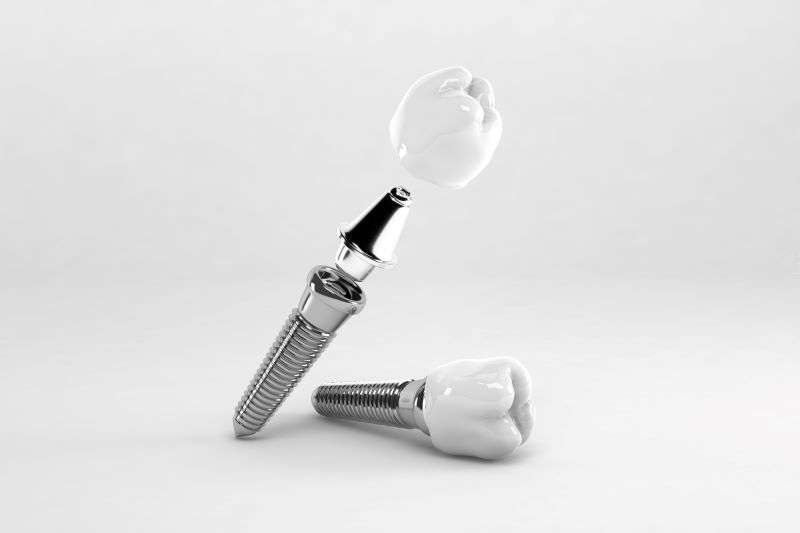
O titânio é amplamente considerado altamente biocompatível e é frequentemente usado em implantes e joias para peles sensíveis. O titânio comercialmente puro e as ligas comuns de titânio não contêm níquel, portanto as reações alérgicas são muito menos prováveis. O titânio também é bem tolerado em contato prolongado com o corpo, por isso é comumente usado em implantes ortopédicos e dentários.
Qual é a aparência do aço inoxidável e do titânio?
O aço inoxidável é conhecido por sua aparência branco-prateada brilhante. Ele pode ser polido até obter um acabamento espelhado e possui bordas nítidas e superfícies detalhadas, razão pela qual é amplamente utilizado em relógios, joias e eletrodomésticos. O aço inoxidável também aceita bem acabamentos escovados, acetinados ou jateados, embora geralmente permaneça mais brilhante que o titânio. Com o tempo, o aço inoxidável polido pode desenvolver arranhões finos e impressões digitais, mas muitas dessas marcas podem ser limpas ou polidas.
O titânio geralmente parece mais escuro, geralmente descrito como um tom cinza ou metálico, com um brilho mais suave. Mesmo quando polido, raramente atinge o mesmo brilho espelhado do aço inoxidável, e muitos produtos de titânio usam acabamentos fosco ou acetinado. A superfície mais suave pode tornar pequenos arranhões menos perceptíveis. O titânio também pode seranodizadopara produzir cores como azul ou roxo, enquanto o aço inoxidável normalmente permanece prateado, a menos que seja revestido.
Na mão, o aço inoxidável parece mais substancial, enquanto o titânio parece visivelmente mais leve. O titânio também conduz o calor mais lentamente, por isso tende a parecer menos frio ao toque e mais confortável com as mudanças de temperatura.
Titânio vs. Aço Inoxidável: Custo e Disponibilidade
O aço inoxidável é geralmente muito mais acessível que o titânio. É produzido em grande escala, as matérias-primas estão amplamente disponíveis e o ecossistema de produção está bem estabelecido. Como resultado, os tipos de aço inoxidável comuns são baratos e fáceis de obter, tanto como matéria-prima quanto como peças acabadas.
O titânio, por outro lado, tem um preço muito mais alto. Embora seja abundante na natureza, a extração e o refino do titânio são complexos e consomem muita energia, o que aumenta os custos do material. O titânio também é mais exigente para usinar e soldar. Muitas vezes requer velocidades de corte mais lentas, ferramentas especializadas e um controle de processo mais rígido, o que aumenta os custos de fabricação.
A disponibilidade segue um padrão semelhante. O aço inoxidável é onipresente e aparece em tudo, desde fixadores até eletrodomésticos. O titânio está prontamente disponível nas cadeias de abastecimento aeroespacial, médica e industrial, mas em muitas aplicações gerais ou de consumo ainda é tratado como um material especial, com menos opções prontas para uso e, muitas vezes, prazos de entrega mais longos.
Titânio versus aço inoxidável: o que é mais fácil de trabalhar?
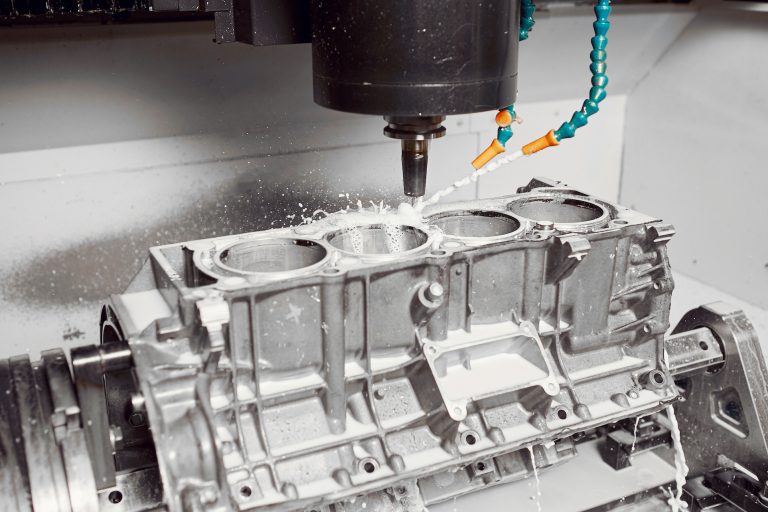
Do ponto de vista da fabricação, o aço inoxidável é geralmente mais fácil de processar. A maioria das oficinas está familiarizada com ele e pode ser cortado, perfurado, usinado e soldado usando equipamento padrão. É por issousinagem CNC em aço inoxidável é amplamente utilizado em muitos setores. O aço inoxidável pode endurecer e não é tão fácil de usinar quanto o aço-carbono ou o alumínio, mas continua sendo um material bem compreendido. Algumas classes são até otimizadas para usinabilidade, como o aço inoxidável 303.
O titânio é mais exigente para trabalhar. Ele não dissipa bem o calor durante a usinagem e pode ser um tanto pegajoso, o que geralmente requer velocidades de corte mais lentas, ferramentas especializadas e uso cuidadoso de refrigerante para controlar o desgaste da ferramenta. A soldagem também requer um controle mais rigoroso, uma vez que o titânio quente reage prontamente com o oxigênio e deve ser protegido por uma forte blindagem de gás inerte.
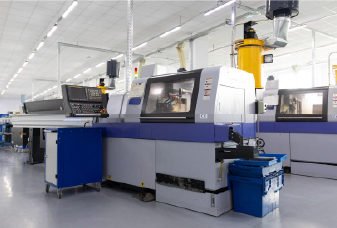
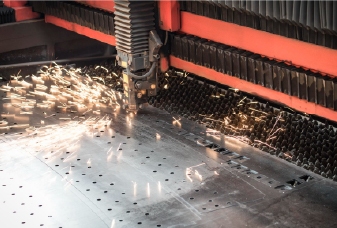
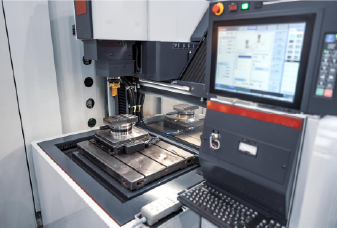
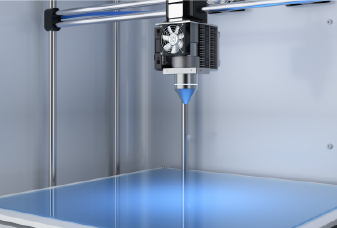
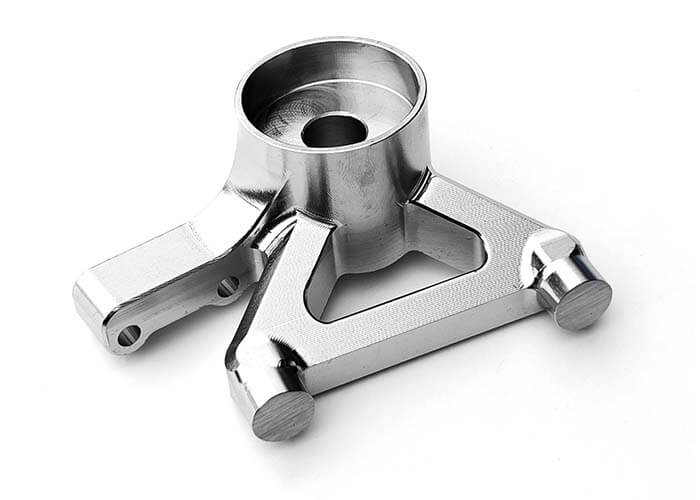
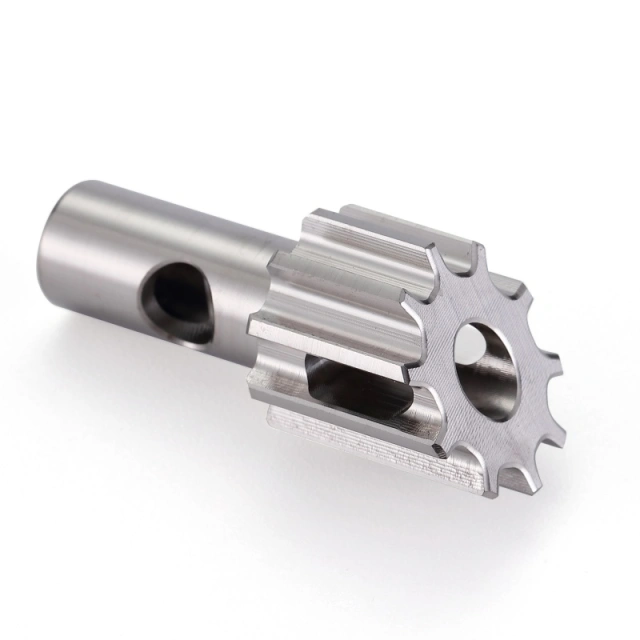
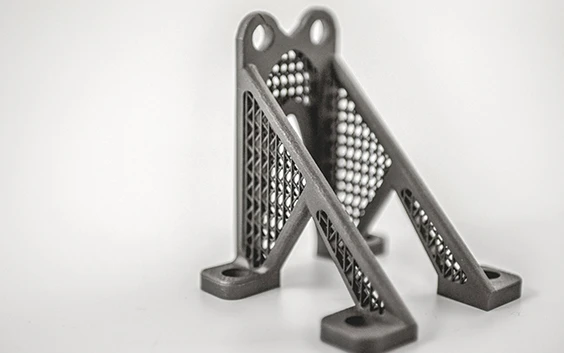
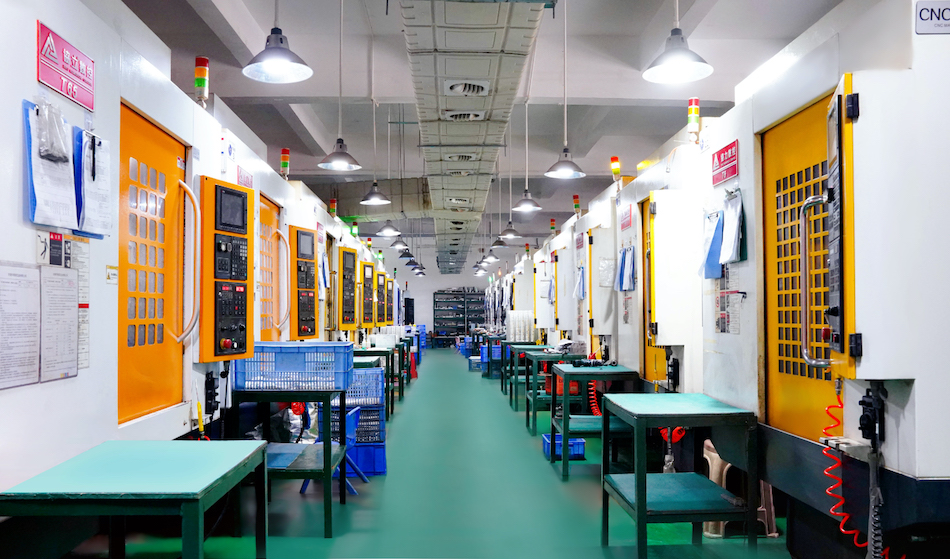
Na prática, ambos os materiais podem ser usinados com sucesso quando as ferramentas e os parâmetros corretos são usados. Com mais de uma década de experiência em fabricação, a equipe da Chiggo trabalha com aço inoxidável e titânio em vários processos, incluindoUsinagem CNC,fabricação de chapas metálicase impressão 3D de metal, ajudando os fabricantes a produzir peças complexas com qualidade e precisão consistentes.
Titânio versus aço inoxidável: qual é o certo para o seu projeto?
Característica
Titânio
Aço inoxidável
Comentário
Preço
❌
✅
O aço inoxidável é significativamente mais acessível
Peso
✅
❌
O titânio é cerca de 40–45% mais leve
Força (Rendimento/Tração)
✅
✅
Comparável dependendo da nota
Dureza
❌
✅
O aço inoxidável é geralmente mais duro
Durabilidade
❌
✅
O inox resiste melhor a arranhões e impactos
Resistência à corrosão
✅
❌
O titânio tem melhor desempenho em ambientes agressivos
Desempenho em alta temperatura
❌
✅
Muitos aços inoxidáveis toleram temperaturas mais altas
Biocompatibilidade
✅
❌
O titânio é geralmente mais amigo da pele
Capacidade de fabricação
❌
✅
O aço inoxidável é mais fácil de usinar e soldar
Em muitos casos, não existe um único material “melhor”. A escolha certa depende de suas prioridades.
O aço inoxidável é normalmente a opção prática para produtos de uso diário e designs sensíveis ao custo. Ele fornece alta resistência, durabilidade e resistência confiável à corrosão a um custo muito menor.
O titânio é frequentemente escolhido quando a redução de peso, a resistência à corrosão ou a biocompatibilidade são mais importantes. Sua alta relação resistência/peso o torna valioso em aplicações aeroespaciais, marítimas, médicas e outras aplicações focadas no desempenho.